Imagine receiving a letter that changes everything—full tuition, room and board, and a pathway to your future, all covered. For thousands of international students, this isn’t a fantasy. It’s happening right now. The United States offers some of the world’s most generous fully funded scholarship programs, yet most students never apply because they don’t know where to look or how to position themselves. This guide cuts through the noise and gives you the exact blueprint to land life-changing scholarships in 2026.
Understanding Fully Funded Scholarships in America
Fully funded scholarships represent the holy grail of educational opportunities. Unlike partial scholarships that cover tuition only, these comprehensive packages eliminate financial barriers entirely. They typically include tuition, fees, room and board, books, and sometimes even a stipend for personal expenses.
The United States leads globally in scholarship generosity, with universities and private organizations collectively awarding billions annually. What makes American scholarships unique is their merit-based structure—they reward academic excellence, leadership, and potential rather than solely financial need. This democratizes opportunity, meaning students from any economic background can compete on equal footing.

Why American Universities Invest in International Talent
Universities recognize that international students bring irreplaceable value. They diversify campus perspectives, contribute to research initiatives, and often become global ambassadors for their institutions. Top-tier universities like Harvard, MIT, and Stanford actively recruit exceptional international talent and remove financial obstacles to enrollment.
The competition is fierce but absolutely winnable. Universities receive thousands of applications annually, yet they’re genuinely searching for diamonds in the rough—students whose potential transcends their circumstances. Your story, achievements, and vision matter more than your zip code.
The Landscape: Types of Fully Funded Scholarships Available
Understanding scholarship categories helps you target opportunities strategically. The scholarship ecosystem is diverse, offering multiple pathways to full funding.
Merit-Based Scholarships
Merit-based awards recognize academic excellence, standardized test scores, and intellectual achievement. These scholarships don’t consider financial need—they’re purely about demonstrated capability and potential.
Key characteristics:
- Awarded based on GPA, test scores (SAT/ACT), and academic records
- Highly competitive but predictable selection criteria
- Examples include the Fulbright Scholarship and university-specific honors programs
- Often renewable annually if you maintain academic standards
Need-Based Scholarships
Contrary to popular belief, many American universities practice need-blind admissions for international students and commit to meeting 100% of demonstrated financial need. This means your inability to pay doesn’t disadvantage your application.
Key characteristics:
- Determined by financial circumstances and family income
- Requires detailed financial documentation
- Often combined with merit considerations
- Universities like Princeton and Yale guarantee full funding for admitted international students
Talent-Based Scholarships
These awards recognize exceptional abilities in athletics, arts, music, or other specialized fields. If you’re a recruited athlete or accomplished performer, this pathway deserves serious exploration.
Key characteristics:
- Requires demonstrated excellence in your field
- Often involves auditions, portfolios, or recruitment processes
- Can be combined with academic merit scholarships
- Particularly generous in Division I athletics
Government and Organization-Sponsored Programs
Numerous governments and international organizations fund scholarships for their citizens studying abroad. These programs often include prestigious opportunities like the Chevening Scholarship (UK-focused but valuable reference) and country-specific initiatives.
Key characteristics:
- Sponsored by governments, NGOs, or corporations
- Often include leadership development components
- May require service commitments post-graduation
- Highly competitive but often overlooked by applicants
Comparison Table: Major Fully Funded Scholarship Programs
| Scholarship Program | Coverage | Eligibility | Application Deadline | Award Amount |
|---|---|---|---|---|
| Fulbright Scholarship | Tuition + living expenses | Bachelor’s/Master’s graduates | Varies by country | $20,000-$30,000+ |
| QuestBridge | Full tuition + room/board | US high school seniors (low-income) | September 2025 | Full ride |
| Reach for the Stars | Tuition + fees + room/board | International students, any major | Rolling basis | Full coverage |
| Chevening Scholarship | Tuition + stipend | Master’s students | November 2025 | £18,000-£25,000 |
| Schwarzman Scholars | Full tuition + living expenses | Master’s students | September 2025 | Full ride |
| MEXT Scholarship | Tuition + monthly stipend | International students from partner countries | May 2025 | ¥144,000/month |
Step-by-Step Application Blueprint for 2026
Success requires systematic preparation. This blueprint breaks the application journey into manageable phases, each with specific action items.
Phase 1: Self-Assessment and Goal Setting (Months 1-2)
Before applying anywhere, understand your strengths and limitations honestly.
Action items:
- Calculate your current GPA and identify areas for improvement
- Review standardized test requirements (SAT, ACT, IELTS, TOEFL)
- List your extracurricular achievements, leadership roles, and community service
- Document any unique circumstances or challenges you’ve overcome
- Identify your academic interests and career aspirations
This foundation prevents wasted effort on misaligned opportunities. If you’re a humanities student with average math scores, pursuing engineering scholarships at technical institutes wastes valuable application energy.
Phase 2: Research and List Building (Months 2-4)
Systematic research separates serious applicants from casual ones. Create a comprehensive list of realistic targets.
Research resources:
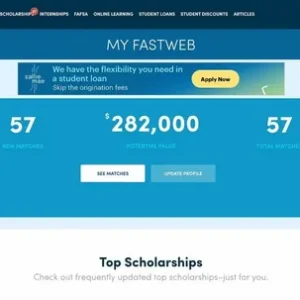
- FastWeb – Database of over 1.3 million scholarships
- ScholarshipPortal.com – International student-focused database
- University financial aid websites directly
- Your country’s education ministry or embassy
- International student organizations and alumni networks
Building your list:
- Identify 15-20 universities that genuinely interest you
- Research each institution’s international student funding
- Note application deadlines and requirements
- Categorize as “reach,” “target,” or “safety” schools
- Document specific scholarship programs at each institution
Phase 3: Standardized Test Preparation (Months 3-6)
Strong test scores open doors. Most fully funded scholarships require competitive scores.
Timeline for test preparation:
- SAT/ACT: Begin 6-8 months before applications; aim for top 10% performance
- TOEFL/IELTS: Start 3-4 months prior; target scores above 100 TOEFL or 7.5 IELTS
- GRE/GMAT: For graduate programs, begin 4-6 months ahead
Preparation strategies:
- Use official practice materials exclusively
- Take full-length practice tests under timed conditions
- Identify weak areas and target them specifically
- Consider professional tutoring if resources allow
- Retake tests if scores don’t meet targets—most programs allow multiple attempts
Phase 4: Crafting Your Narrative (Months 4-7)
Your application tells a story. Scholarship committees read thousands of essays; yours must resonate emotionally while demonstrating capability.
Essential documents to prepare:
Personal Statement/Essay
- Reveal your authentic self, not a polished fiction
- Connect your background to your aspirations
- Show vulnerability—how challenges shaped you
- Demonstrate why you specifically need this opportunity
- Keep it between 500-750 words unless specified otherwise
Recommendation Letters
- Request letters from teachers/professors who know you well
- Provide them with your CV, essay draft, and scholarship details
- Give them at least 4 weeks’ notice
- Choose recommenders who can speak to your intellectual curiosity and character
- Ideally, obtain 2-3 letters from different contexts (academic, extracurricular, community)
CV/Resume
- Highlight academic achievements, leadership roles, and relevant experience
- Include community service and volunteer work
- List publications, presentations, or projects
- Keep it to one page for undergraduate applications, two pages for graduate
Phase 5: Application Submission (Months 7-10)
Execution matters. Attention to detail separates accepted from rejected applicants.
Critical checklist before submitting:
- ✓ All required documents included and formatted correctly
- ✓ Application fee paid (if applicable)
- ✓ Essay proofread multiple times by native English speakers
- ✓ Contact information accurate and monitored regularly
- ✓ Deadline confirmed and submitted 24 hours early to avoid technical issues
- ✓ Confirmation receipt saved and documented
Pro tips:
- Create a spreadsheet tracking all applications, deadlines, and requirements
- Set phone reminders for each deadline
- Submit applications in batches to maintain quality control
- Never rush submissions—a polished late application beats a sloppy early one
Winning Strategies: What Scholarship Committees Actually Want
Understanding selection criteria gives you competitive advantage. Committees evaluate applications holistically, weighing multiple factors.
Academic Excellence with Purpose
Grades matter, but context matters more. A 3.8 GPA from a student with limited resources impresses more than identical grades from privileged circumstances.
How to demonstrate this:
- Explain challenging courses you’ve taken
- Acknowledge limitations in your educational system
- Show improvement trajectory over time
- Connect academic interests to real-world problems
Leadership and Impact
Committees seek students who’ll contribute to campus and eventually lead globally. Leadership doesn’t require formal titles—it means initiative and influence.
Compelling leadership examples:
- Started a club or initiative addressing community needs
- Mentored younger students or peers
- Organized events or campaigns
- Took responsibility during crises
- Influenced others toward positive change
Authentic Motivation
Why do you want to study in America? Why this university? Why this program? Generic answers fail. Specific, personal, and genuine motivations convince.
Crafting authentic motivation:
- Research the university deeply—know specific programs, professors, resources
- Connect your goals to what the institution uniquely offers
- Explain how American education specifically serves your aspirations
- Avoid phrases like “world-class education”—everyone says that
- Show knowledge of campus culture and values
Resilience and Perspective
Overcoming adversity demonstrates character. Your challenges—whether financial, educational, or personal—reveal your determination.
Effectively communicating resilience:
- Be specific about challenges faced
- Explain concrete actions you took in response
- Show what you learned about yourself
- Avoid playing victim—emphasize agency and growth
- Connect past challenges to future aspirations
Diversity of Thought and Experience
International students inherently bring global perspective. Emphasize what unique viewpoint you’ll contribute to campus.
Highlighting your unique perspective:
- Discuss cultural background and values
- Explain experiences unavailable to domestic students
- Share how your country’s challenges inform your goals
- Describe how you’ll bridge cultures on campus
Common Application Mistakes to Avoid
Learning from others’ failures accelerates your success. These mistakes eliminate otherwise qualified candidates.
Mistake 1: Generic Applications
Submitting identical essays to multiple universities signals disinterest. Each institution wants to feel special.
Solution: Customize every application. Research each university’s mission, specific programs, and campus culture. Reference specific professors, facilities, or initiatives that genuinely excite you.
Mistake 2: Ignoring Instructions
Scholarship committees receive hundreds of applications. Those ignoring specific requirements get rejected immediately.
Solution: Create a checklist for each application. Verify word counts, formatting, required documents, and submission methods. Follow instructions exactly.
Mistake 3: Weak Essays
Mediocre writing undermines strong credentials. Poor grammar, unclear thinking, or clichéd phrases damage applications.
Solution: Write multiple drafts. Get feedback from teachers, mentors, and native English speakers. Read your essay aloud to catch awkward phrasing. Revise ruthlessly.
Mistake 4: Insufficient Preparation
Applying last-minute to scholarships you haven’t researched wastes everyone’s time.
Solution: Begin research 12-18 months before intended enrollment. Create timelines for each deadline. Prepare materials systematically.
Mistake 5: Overlooking Smaller Scholarships
Students fixate on prestigious programs while ignoring smaller awards. Multiple smaller scholarships often combine into full funding.
Solution: Research local scholarships, industry-specific awards, and lesser-known programs. These face less competition and higher acceptance rates.
Financial Documentation and Visa Considerations
Securing a scholarship is half the battle. Completing financial documentation and obtaining visas requires equal diligence.
Preparing Financial Documents
Universities require proof of financial capacity or scholarship coverage for visa purposes.
Essential documents:
- Bank statements showing family financial resources
- Tax returns or income verification
- Scholarship award letters
- Affidavit of financial support (if applicable)
- Employment verification letters
Timeline: Begin gathering documents 6 months before intended enrollment. Some documents require official translations and notarization.
Student Visa (F-1) Requirements
Once you’ve secured a scholarship, the F-1 visa process begins.
Key steps:
- University issues Form I-20 (Certificate of Eligibility)
- Pay SEVIS fee ($350)
- Schedule visa interview at US embassy/consulate
- Prepare documentation proving financial support
- Demonstrate ties to your home country
- Attend visa interview confidently
Pro tip: Schedule visa interviews early in the summer. Embassies experience high volume, and delays can jeopardize your enrollment.
Real Stories: International Students Who Won Full Scholarships
Learning from successful applicants provides inspiration and practical insight.
Amara’s Journey from Nigeria
Amara grew up in Lagos with limited English exposure. She spent two years improving her English while maintaining a 3.9 GPA. Her essay focused on how education could address healthcare disparities in her community. She applied to 12 universities and received full scholarships from 4, ultimately choosing a school with a strong public health program. Her success came from authentic motivation and systematic preparation.
Chen’s Path from China
Chen excelled academically but initially struggled with standardized tests. Rather than giving up, he took the SAT five times, improving each attempt. His leadership in founding an environmental club demonstrated initiative. His essay connected climate change to his career aspirations in renewable energy. He received the Schwarzman Scholars award, one of the world’s most competitive scholarships.
Priya’s Story from India
Priya came from a middle-class family but demonstrated exceptional leadership in her community. She organized educational programs for underprivileged children and spoke about this experience authentically in her application. Her modest academic credentials (3.6 GPA) were offset by demonstrated impact and resilience. She won a full scholarship from a university impressed by her character and vision.
These stories share common threads: authenticity, persistence, strategic preparation, and genuine motivation.
Timeline and Checklist for 2026 Applications
Success requires organization. This timeline ensures nothing falls through the cracks.
2025 Timeline:
| Month | Action Items |
|---|---|
| January | Self-assessment; identify target universities |
| February-March | Begin standardized test preparation |
| April | Take first SAT/ACT attempt |
| May | Research scholarships; build application list |
| June | Retake standardized tests if needed |
| July | Request recommendation letters; begin essay drafting |
| August | Finalize essays; prepare all documents |
| September | Submit early applications (rolling basis) |
| October | Submit additional applications |
| November | Complete remaining applications |
| December | Prepare for interviews; gather financial documents |
2026 Timeline:
| Month | Action Items |
|---|---|
| January-February | Receive acceptance/scholarship decisions |
| March | Confirm enrollment and scholarship acceptance |
| April | Gather visa documents; pay SEVIS fee |
| May | Schedule visa interview |
| June | Attend visa interview; receive visa |
| July | Prepare for arrival; arrange housing |
| August | Arrive in the United States |
Resources and Support Systems
You’re not alone in this journey. Numerous resources exist to support your application.
Online Platforms and Databases
- EducationUSA – Official US government resource for international students
- College Board – SAT information and resources
- Common App – Centralized application platform
- International Student Organizations – Networking and support
Mentorship and Counseling
- Seek guidance from school counselors or teachers
- Connect with international student alumni at target universities
- Join online communities of scholarship applicants
- Consider hiring an educational consultant (if resources allow)
Test Preparation Resources
- Official SAT/ACT practice materials
- Khan Academy (free SAT prep)
- TOEFL/IELTS official websites
- Local test preparation centers
Final Thoughts: Your Path Forward
Fully funded scholarships to American universities aren’t reserved for the exceptionally privileged or academically elite. They’re available to determined students willing to invest effort strategically. The blueprint provided here removes mystery from the process, replacing it with actionable steps.
Your background doesn’t determine your future—your actions do. Students from modest circumstances, first-generation learners, and those overcoming significant challenges win these scholarships regularly. What separates winners from applicants is systematic preparation, authentic storytelling, and persistent effort.
Start today. Research universities that genuinely excite you. Prepare for standardized tests. Craft your authentic narrative. Build your application strategically. The American dream isn’t reserved for Americans—it’s available to anyone willing to pursue it deliberately.
Your fully funded scholarship awaits. Go claim it.