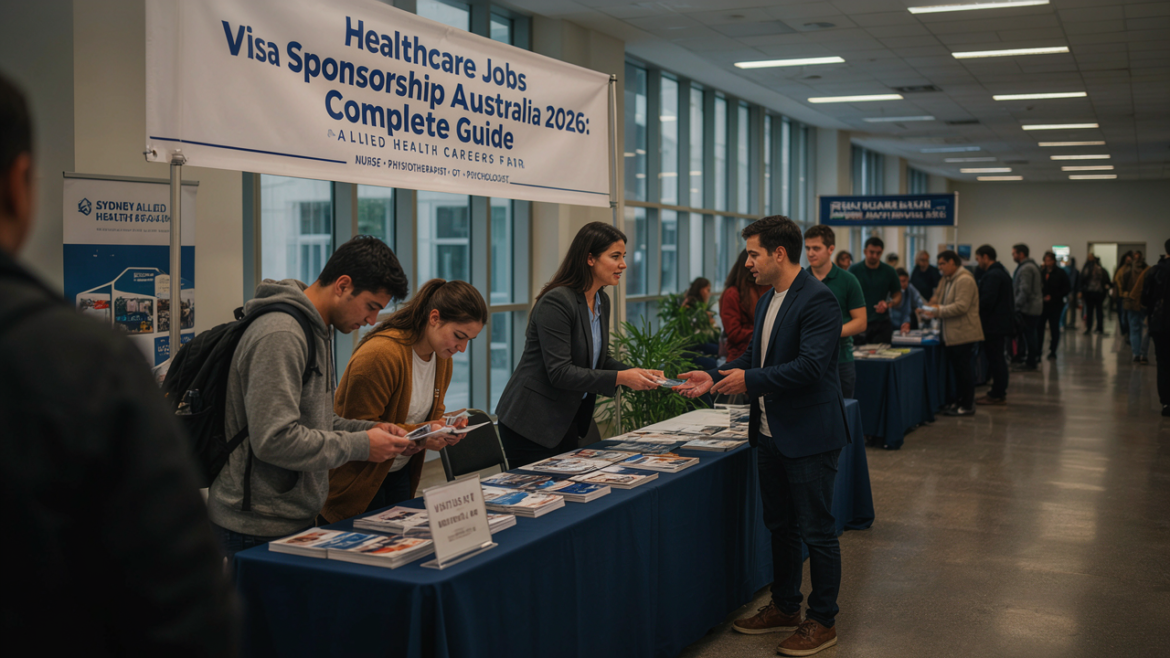
Healthcare Jobs With Visa Sponsorship in Australia 2026: How Nurses and Doctors Can Get Sponsored
Australia is facing one of the most significant healthcare workforce shortages in its history. Hospitals in metropolitan areas are stretched thin, and rural and regional communities are struggling to fill critical nursing and medical positions. This shortage has created genuine, verified opportunities for internationally qualified nurses and doctors to secure employment with visa sponsorship.
This article is written for qualified healthcare professionals outside Australia who want to understand the real pathways to sponsored employment. You will find information about visa subclasses, professional registration requirements, where to find legitimate job listings, what employers actually sponsor, and how to protect yourself from fraud.
Every visa pathway, registration body, and government resource mentioned below can be verified on official Australian government websites. Where specific 2026 recruitment cycles have not yet been announced, this article says so clearly.
Important: ScholarCareer.com does not guarantee employment, visa approval, or professional registration. Always confirm the latest requirements on official sources before making any decisions or payments.
What You Need to Know About Healthcare Visa Sponsorship in Australia
Australia does not have a single “healthcare worker visa.” Instead, internationally qualified nurses and doctors access sponsorship through several established visa pathways, each with different requirements, durations, and conditions.
The two most common employer-sponsored visas for healthcare workers are:
- Temporary Skill Shortage (TSS) visa — subclass 482
- Employer Nomination Scheme (ENS) visa — subclass 186
Both require an approved Australian employer to nominate you for a specific position. You cannot self-sponsor under these categories.
In addition, points-based skilled migration visas (subclasses 189, 190, and 491) are popular among healthcare professionals. While these are not employer-sponsored in the traditional sense, many healthcare workers use them to gain work rights and then secure employment after arrival.
Why Australia Needs International Healthcare Workers
The Australian government’s own workforce data consistently shows critical shortages in nursing, midwifery, and medical specialties. Key factors driving demand include:
- An ageing population requiring more healthcare services
- Increasing demand in rural, regional, and remote areas
- Post-pandemic workforce fatigue and attrition
- Growth in the aged care sector
- Insufficient domestic training pipeline to meet demand
The Australian Department of Health and Aged Care, along with state and territory health departments, actively recruit internationally qualified healthcare professionals to fill these gaps.
Which Healthcare Occupations Are Eligible?
The following healthcare occupations are commonly listed on Australia’s skilled occupation lists and are eligible for employer sponsorship. This list is based on the Department of Home Affairs’ published occupation lists:
Nursing and Midwifery:
- Registered Nurse (Aged Care) — ANZSCO 254412
- Registered Nurse (Critical Care and Emergency) — ANZSCO 254415
- Registered Nurse (Medical) — ANZSCO 254418
- Registered Nurse (Mental Health) — ANZSCO 254422
- Registered Nurse (Perioperative) — ANZSCO 254423
- Registered Nurse (Surgical) — ANZSCO 254424
- Registered Nurse (Paediatrics) — ANZSCO 254421
- Registered Nurse (Community Health) — ANZSCO 254414
- Registered Nurse (Child and Family Health) — ANZSCO 254413
- Midwife — ANZSCO 254111
- Nurse Practitioner — ANZSCO 254411
Medical Practitioners:
- General Practitioner — ANZSCO 253111
- Resident Medical Officer — ANZSCO 253112
- Specialist Physicians (various specializations)
- Surgeons (various specializations)
- Psychiatrist — ANZSCO 253411
- Anaesthetist — ANZSCO 253211
Allied Health (also in demand, though this article focuses on nurses and doctors):
- Physiotherapist, Occupational Therapist, Medical Imaging Practitioner, and others
Critical point: Being on the occupation list does not automatically guarantee sponsorship. You must still meet professional registration requirements, English language standards, and find an employer willing to nominate you.
Visa Pathways for Healthcare Workers in Australia
: Temporary Skill Shortage (TSS) Visa — Subclass 482
Overview: The subclass 482 visa is the most common employer-sponsored temporary visa for healthcare workers. It allows an approved Australian employer to sponsor a skilled overseas worker for a specific position they cannot fill locally.
Streams:
- Short-Term Stream: Up to 2 years (renewable onshore once for a further 2 years). Applies to occupations on the Short-term Skilled Occupation List (STSOL).
- Medium-Term Stream: Up to 4 years. Applies to occupations on the Medium and Long-term Strategic Skills List (MLTSSL). Most registered nursing and medical practitioner occupations fall under this stream.
- Labour Agreement Stream: For employers with a formal labour agreement with the Australian government (common in aged care and regional health).
Key Requirements:
- Nomination by an approved Australian employer
- At least 2 years of relevant work experience in the nominated occupation
- Relevant skills assessment (if required for your occupation and country)
- English language proficiency (minimum IELTS 5.0 in each band for short-term stream; IELTS 5.0 in each band for medium-term stream, though AHPRA registration typically requires higher scores)
- Health and character requirements
- Genuine temporary entrant requirement (for short-term stream)
Pathway to Permanent Residency: The medium-term stream provides a pathway to permanent residency through the ENS subclass 186 visa after working for your sponsoring employer for a specified period (currently 2 years under recent policy changes, but always verify the current requirement).
Official Source: Department of Home Affairs — Subclass 482
: Employer Nomination Scheme (ENS) Visa — Subclass 186
Overview: The subclass 186 visa grants permanent residency from the outset. It is a highly sought-after pathway for experienced healthcare professionals.
Streams:
- Direct Entry Stream: For applicants who have not worked in Australia (or have worked only briefly). Requires a positive skills assessment and typically 3 years of post-qualification experience.
- Temporary Residence Transition Stream: For subclass 482 visa holders who have worked for their sponsoring employer for the required period.
- Labour Agreement Stream: For workers sponsored under a labour agreement.
Key Requirements:
- Employer nomination for a position on the relevant skilled occupation list
- Competent English (minimum IELTS 6.0 in each band or equivalent)
- Positive skills assessment (Direct Entry)
- Age under 45 at time of application (exemptions may apply for certain medical practitioners and regional positions — verify current rules)
- Health and character requirements
Official Source: Department of Home Affairs — Subclass 186
: Skilled Migration Visas (Subclasses 189, 190, 491)
While not employer-sponsored, these points-based visas are extremely relevant for healthcare professionals because nursing and medical occupations consistently receive invitations at competitive points thresholds.
- Subclass 189 (Skilled Independent): Permanent residency. No employer or state nomination required. You must submit an Expression of Interest (EOI) through SkillSelect and receive an invitation.
- Subclass 190 (Skilled Nominated): Permanent residency. Requires nomination by an Australian state or territory government. Many states actively nominate healthcare workers.
- Subclass 491 (Skilled Work Regional): Provisional 5-year visa. Requires state/territory nomination or family sponsorship in a designated regional area. Provides a pathway to PR (subclass 191) after 3 years.
Official Source: Department of Home Affairs — SkillSelect
Professional Registration: The Most Critical Step
This is where most international healthcare professionals encounter the biggest challenge. Before any Australian employer can sponsor you, you must be eligible for registration with the Australian Health Practitioner Regulation Agency (AHPRA).
Without AHPRA registration (or at least eligibility for registration), no employer can legally employ you as a nurse or doctor in Australia, regardless of visa status.
: Registration for Internationally Qualified Nurses and Midwives (IQNMs)
Regulatory Body: Nursing and Midwifery Board of Australia (NMBA), administered through AHPRA.
The Process (Outcomes-Based Assessment — OBA):
Since 2020, internationally qualified nurses and midwives must complete the OBA process, which replaced the previous bridging program model. The OBA consists of:
- Orientation Part 1: Online module covering the Australian healthcare system, legal and professional frameworks.
- NCLEX-RN Examination: A computer-based multiple-choice exam testing nursing knowledge. Administered by Pearson VUE at test centres worldwide.
- Objective Structured Clinical Examination (OSCE): A practical clinical exam conducted in person at approved test centres in Australia (Adelaide, Melbourne, Perth, Sydney, and others). This tests clinical skills in a simulated environment.
- Orientation Part 2: Completed after arriving in Australia.
English Language Requirements for NMBA Registration:
- IELTS Academic: Minimum 7.0 in each of the four components (listening, reading, writing, speaking)
- OET: Minimum grade B in each subtest
- PTE Academic: Minimum 65 in each communicative skill
- TOEFL iBT: Minimum total score of 94 with minimum scores in each section
Note: These English requirements are higher than the minimum visa requirements. Your AHPRA registration English score is the one that matters most.
Documents Typically Required:
- Passport and identity documents
- Qualification certificates and academic transcripts
- Evidence of registration in your home country
- Employment references and evidence of clinical practice
- Criminal history checks
- English language test results
Official Source: AHPRA — Internationally Qualified Nurses and Midwives
Official Source: NMBA — IQNM Assessment
: Registration for International Medical Graduates (IMGs)
Regulatory Body: Medical Board of Australia, administered through AHPRA.
Pathways:
- Standard Pathway: For IMGs whose primary medical qualification is not from a “competent authority” country.
- Pass the Australian Medical Council (AMC) CAT MCQ Examination
- Pass the AMC Clinical Examination (or Workplace-Based Assessment at an accredited site)
- Complete 12 months of supervised practice in Australia
- Competent Authority Pathway: For doctors who have completed training and registration in the UK, Ireland, USA, Canada, or New Zealand. This pathway may exempt you from the AMC exams, though you still need to meet other requirements.
- Specialist Pathway: For doctors who have completed specialist training overseas. Your qualifications are assessed by the relevant Australian specialist medical college for comparability.
English Language Requirements for Medical Board Registration:
- IELTS Academic: Minimum 7.0 in each component
- OET: Minimum grade B in each subtest
- PTE Academic: Minimum 65 in each section
- TOEFL iBT: Minimum scores as specified by the Medical Board
Official Source: AMC — Pathways to Registration
Official Source: Medical Board of Australia — IMG Registration
Where to Find Legitimate Healthcare Jobs With Visa Sponsorship in Australia
This is the section most readers want to get to quickly, but it requires careful attention. Not every job listing offers visa sponsorship, and many listings that appear to do so are misleading.
State and Territory Health Department Recruitment
Australia’s public health systems are managed at the state and territory level. Each state health department runs its own recruitment campaigns, and many actively recruit internationally qualified healthcare workers, particularly for regional and rural positions.
New South Wales (NSW Health)
- NSW Health regularly recruits internationally qualified nurses and doctors.
- Recruitment campaigns are posted on the NSW Health careers portal.
- Rural and regional Local Health Districts (LHDs) are the most active sponsors.
- Official Source: NSW Health Careers
Queensland (Queensland Health)
- Queensland Health runs targeted international recruitment campaigns, particularly for nursing and medical positions in regional hospitals.
- The “Queensland Health International Recruitment” program has been active in recent years.
- Official Source: Queensland Health Careers
Victoria (Department of Health)
- Victorian public health services recruit internationally, particularly for nursing, midwifery, and medical roles.
- Individual hospital networks (e.g., Monash Health, Alfred Health, Barwon Health) post their own vacancies.
- Official Source: Careers Victoria — Health
Western Australia (WA Health)
- WA Health actively recruits internationally qualified nurses and midwives, particularly for metropolitan and regional hospitals.
- Official Source: WA Health Careers
South Australia (SA Health)
- SA Health recruits internationally for nursing and medical positions, with a focus on regional areas.
- Official Source: SA Health Careers
Northern Territory (NT Health)
- NT Health is one of the most active recruiters of international healthcare workers due to severe workforce shortages in remote communities.
- Official Source: NT Health Careers
Tasmania (Tasmanian Health Service)
- Tasmania recruits internationally for nursing and medical roles, particularly in rural hospitals.
- Official Source: Tasmanian Health Service Careers
Australian Capital Territory (ACT Health)
- Smaller jurisdiction but does recruit internationally for specific roles.
- Official Source: ACT Health Careers
: Major Private Healthcare Employers
Several large private healthcare groups in Australia sponsor international healthcare workers:
- Ramsay Health Care: One of Australia’s largest private hospital operators. Operates over 70 facilities across Australia. Has historically sponsored international nurses and doctors. Careers page: Ramsay Health Care Careers
- Healthscope: Operates private hospitals across Australia. Careers page: Healthscope Careers
- St Vincent’s Health Australia: Major not-for-profit health provider in Sydney, Melbourne, and Brisbane. Careers: St Vincent’s Careers
- Bupa Aged Care / Bupa Health: Major aged care and health insurance provider. Has recruited internationally for aged care nursing roles.
- Regis Aged Care, Estia Health, and other aged care providers: The aged care sector is a major sponsor of international nurses under labour agreements.
Important: Whether a specific private employer is currently sponsoring depends on their current workforce needs and approved sponsorship status. Always check the individual job listing for explicit mention of visa sponsorship.
: Government Job Portals and Aggregators
- APSJobs (Australian Public Service): www.apsjobs.gov.au — For federal government health roles.
- JobActive / Workforce Australia: www.workforceaustralia.gov.au — The Australian government’s employment services platform.
- Seek.com.au: Australia’s largest job board. Search for “visa sponsorship nurse” or “sponsorship doctor” and filter by location. Note: Not all listings that mention sponsorship are verified. Read each listing carefully.
- Indeed Australia: au.indeed.com — Similar to Seek. Use specific search terms.
- MedJobs Australia: www.medjobsaustralia.com — Specialized medical recruitment platform.
- HealthcareLink: www.healthcarelink.com.au — Healthcare-specific job board.
Salary Expectations for Sponsored Healthcare Workers
Salary information below is based on publicly available Australian government award rates and enterprise agreements. Actual salaries vary by state, employer, experience level, shift penalties, and location.
: Registered Nurses
- Entry-level (Year 1): Approximately AUD 65,000–72,000 per annum (base salary, before penalties and allowances)
- Experienced (Year 5–8): Approximately AUD 80,000–95,000 per annum
- Clinical Nurse Specialist / Nurse Unit Manager: Approximately AUD 95,000–115,000+ per annum
- Nurse Practitioner: Approximately AUD 110,000–130,000+ per annum
Note: These figures do not include shift penalties (evening, night, weekend, and public holiday loadings), which can add 15–50% to base salary. Rural and remote positions often include additional allowances and housing benefits.
: Medical Practitioners
- Intern / Resident Medical Officer: Approximately AUD 75,000–95,000 per annum
- Registrar: Approximately AUD 90,000–130,000 per annum
- General Practitioner (GP): Approximately AUD 150,000–300,000+ per annum (varies significantly based on billing model and location)
- Specialist / Consultant: Approximately AUD 200,000–500,000+ per annum
Currency note: All figures are in Australian Dollars (AUD). Exchange rates fluctuate. Use a reliable currency converter for approximate conversions to your local currency.
Step-by-Step Application Guide
Step 1 — Assess Your Eligibility
Before investing time and money, confirm that your qualifications, experience, and English proficiency meet Australian standards. Review the AHPRA registration requirements for your profession and the visa requirements for your target subclass.
Step 2 — Begin Professional Registration
This is the longest part of the process. For nurses, this means starting the OBA process with AHPRA/NMBA. For doctors, this means beginning the AMC assessment pathway. Start this step as early as possible — it can take 6–18 months or longer.
Step 3 — Achieve Required English Language Scores
Book and pass your English language test (IELTS Academic, OET, or PTE Academic). Aim for the AHPRA registration standard, which is higher than the minimum visa requirement.
Step 4 — Prepare Your Documents
Gather certified copies of your qualifications, transcripts, registration certificates, employment references, identity documents, and criminal history checks. Ensure all documents are in English or accompanied by certified translations.
Step 5 — Create a Professional Australian-Style CV
Australian healthcare employers expect a clear, detailed CV that includes your clinical experience, specializations, certifications, and scope of practice. Keep it factual and evidence-based.
Step 6 — Search for Sponsored Positions
Use the official sources listed above. Focus on state health department recruitment campaigns and large private hospital groups. Look for job listings that explicitly state “visa sponsorship available” or “employer nomination available.”
Step 7 — Apply Through Official Channels
Submit your application through the employer’s official careers portal. Do not apply through unofficial agents unless you have independently verified their legitimacy.
Step 8 — Complete Employer Interviews and Assessments
If shortlisted, you may be required to complete video interviews, clinical scenario assessments, or reference checks.
Step 9 — Receive Job Offer and Nomination
If successful, the employer will issue a formal job offer and begin the nomination process with the Department of Home Affairs.
Step 10 — Lodge Your Visa Application
Once the nomination is approved, lodge your visa application through your ImmiAccount on the Department of Home Affairs website. Pay the visa application charge and submit all required documents.
Step 11 — Complete Health and Character Checks
You will need to undergo medical examinations and provide police clearance certificates from every country where you have lived for 12 months or more in the past 10 years.
Step 12 — Receive Visa Grant and Relocate
Once your visa is granted, coordinate your relocation with your employer. Many state health departments provide relocation assistance for international recruits.
Documents You Will Typically Need
- Valid passport (with at least 6 months validity)
- Birth certificate
- Marriage certificate (if applicable)
- Academic qualifications and transcripts (certified copies)
- Professional registration certificates from your home country
- Detailed employment references on official letterhead
- English language test results (IELTS, OET, or PTE)
- AHPRA registration or letter of eligibility
- Skills assessment outcome (if required for your visa subclass)
- Curriculum Vitae (CV)
- Police clearance certificates
- Medical examination results (from a panel physician approved by the Australian government)
- Passport-sized photographs
- Evidence of health insurance (if required)
Important Things to Know Before Applying (Reality Check)
Competition Is Real
While Australia needs healthcare workers, the application process is competitive. Thousands of internationally qualified nurses and doctors apply each year. Having strong clinical experience, excellent English scores, and flexibility about location (especially willingness to work in regional areas) significantly improves your chances.
Registration Takes Time and Money
The AHPRA registration process for internationally qualified nurses (OBA pathway) involves exam fees, travel to Australia for the OSCE, and preparation costs. For doctors, the AMC pathway involves significant examination fees. Budget for these costs before starting.
Approximate costs (verify current fees on official sources):
- NCLEX-RN exam: approximately USD 200
- OET exam: approximately AUD 587
- IELTS Academic: approximately AUD 410
- AMC CAT MCQ: approximately AUD 2,875
- AMC Clinical Exam: approximately AUD 3,690
- AHPRA application fees: vary by profession and pathway
Visa Sponsorship Is Not Guaranteed
An employer may express interest in sponsoring you but ultimately be unable to do so if they lose their approved sponsor status, if the position is filled locally, or if your registration is delayed. Never resign from your current position based on a verbal promise of sponsorship.
Regional Positions Are Easier to Secure
If you are willing to work in rural, regional, or remote Australia, your chances of securing sponsorship increase significantly. Many metropolitan hospitals receive far more applications than they can process, while regional facilities struggle to attract applicants.
Beware of Fraud
This cannot be emphasized enough. The demand for Australian healthcare jobs has created a thriving market for scammers. See the scam protection section below.
Common Job and Visa Scams to Avoid
Red Flags of a Fake Job Offer:
- The “employer” contacts you through WhatsApp, Telegram, or Facebook Messenger without a formal application process
- You are asked to pay a “processing fee,” “visa fee,” or “agent fee” before receiving a job offer
- The email address does not match the official hospital or health department domain (e.g., a Gmail or Yahoo address instead of @health.nsw.gov.au)
- The job offer arrives without an interview
- The salary offered seems unrealistically high
- You are asked to send money via cryptocurrency, Western Union, or bank transfer to a personal account
- The “agent” guarantees visa approval or registration
How to Protect Yourself:
- Only apply through official employer websites or verified recruitment platforms
- Verify the employer’s existence on the Australian Business Register: abr.business.gov.au
- Check that the recruitment agency is registered with the relevant state authority
- Never pay money to secure a job offer — legitimate Australian employers do not charge candidates recruitment fees
- Verify visa information only on the Department of Home Affairs website: immi.homeaffairs.gov.au
- If an offer seems too good to be true, it almost certainly is
ScholarCareer.com does not act as a recruitment agent, migration agent, or visa sponsor. We provide information only.
Opportunities for African and Nigerian Healthcare Professionals
Internationally qualified nurses and doctors from African countries, including Nigeria, Ghana, South Africa, Kenya, Zimbabwe, and others, are eligible to apply for Australian healthcare positions and visa sponsorship, provided they meet all registration and visa requirements.
Key considerations for African applicants:
- Qualification recognition: Your nursing or medical degree must be assessed as comparable to Australian standards. Graduates from well-recognized universities in South Africa, Nigeria, Ghana, and other countries have successfully completed the AHPRA registration process.
- English language: If your training was conducted in English, you may still need to provide formal English test results (IELTS, OET, or PTE) for AHPRA registration.
- Clinical experience: Australian employers typically prefer candidates with at least 2–3 years of post-qualification clinical experience in a hospital setting.
- Registration in home country: You must hold current, unrestricted registration in your home country (or most recent country of practice).
- Visa processing times: Processing times vary by country and individual circumstances. Check current processing times on the Department of Home Affairs website.
- Police clearances: You will need police clearance certificates from every country where you have lived for 12 months or more in the past 10 years.
There are no nationality-based restrictions on the subclass 482 or 186 visas. Eligibility is based on occupation, skills, registration, and employer nomination — not nationality.
Best Options at a Glance
| Category | Best Option | Why |
|---|---|---|
| Best for Nurses Seeking Sponsorship | State Health Department Recruitment (NSW, QLD, WA, NT) | Largest volume of sponsored positions, structured onboarding, relocation support |
| Best for Doctors Seeking Sponsorship | State Health Rural/Regional Medical Recruitment | High demand, competitive salaries, strong pathway to PR |
| Best Visa Pathway for PR | Subclass 186 (ENS) Direct Entry | Permanent residency from day one |
| Best Visa Pathway for Temporary Work | Subclass 482 (TSS) Medium-Term Stream | Up to 4 years, pathway to PR, most nursing/medical occupations eligible |
| Best for Regional Placement | NT Health and WA Health | Severe workforce shortages, active international recruitment, additional incentives |
| Best for Aged Care Nurses | Labour Agreement Stream (Subclass 482) | Aged care sector has dedicated labour agreements for international nurse recruitment |
| Best for Quick Processing | Healthcare occupations on MLTSSL | Priority processing for healthcare workers on the medium-term list |
Conclusion
Australia’s healthcare workforce shortage is creating real, verified opportunities for internationally qualified nurses and doctors to secure employment with visa sponsorship. The pathways are well-established, the visa subclasses are clearly defined, and the major employers — particularly state health departments — are actively recruiting.
However, the process is not fast, not cheap, and not simple. Professional registration through AHPRA is the most significant hurdle, and it requires time, preparation, and financial investment. Visa sponsorship depends on finding an employer willing and approved to nominate you, and that employer will expect you to be registration-ready or very close to it.
What you should do now:
- Visit the AHPRA website and begin assessing your registration eligibility.
- Book your English language test if you have not already done so.
- Monitor the careers pages of the state health departments listed above for active recruitment campaigns.
- Prepare your documents and CV to Australian standards.
- Apply only through official channels and never pay an agent for a job offer.
Keep checking ScholarCareer.com for verified scholarship, study abroad, job, and career opportunities.
11. SCHOLARSHIP/JOB COMPARISON TABLE
| Job Category | Major Employers | Visa Pathway | Registration Body | Typical Salary (AUD) | Sponsorship Confirmed | Official Source |
|---|---|---|---|---|---|---|
| Registered Nurse (General) | NSW Health, QLD Health, WA Health, Ramsay Health Care | Subclass 482 / 186 | AHPRA (NMBA) | $65,000–$95,000 | Yes — via state health recruitment and major private hospitals | health.nsw.gov.au/careers |
| Registered Nurse (Aged Care) | Bupa, Regis, Estia Health, various providers | Subclass 482 (Labour Agreement) | AHPRA (NMBA) | $65,000–$85,000 | Yes — under aged care labour agreements | immi.homeaffairs.gov.au |
| Registered Nurse (Critical Care) | Major metropolitan hospitals | Subclass 482 / 186 | AHPRA (NMBA) | $75,000–$100,000 | Yes — high demand specialty | State health careers portals |
| Midwife | State health departments, private maternity hospitals | Subclass 482 / 186 | AHPRA (NMBA) | $70,000–$95,000 | Yes — listed on MLTSSL | State health careers portals |
| General Practitioner (GP) | Rural/regional medical practices, Aboriginal Medical Services | Subclass 482 / 186 / 190 | AHPRA (Medical Board) | $150,000–$300,000+ | Yes — high demand in regional areas | health.gov.au |
| Resident Medical Officer | State public hospitals | Subclass 482 / 186 | AHPRA (Medical Board) | $75,000–$95,000 | Yes — via state health recruitment | State health careers portals |
| Specialist Physician | Public hospitals, private practices | Subclass 482 / 186 | AHPRA (Medical Board) | $200,000–$500,000+ | Yes — critical shortage areas | State health careers portals |
| Nurse Practitioner | Public and private hospitals | Subclass 482 / 186 | AHPRA (NMBA) | $110,000–$130,000+ | Yes — advanced practice roles | State health careers portals |
Note: “Sponsorship Confirmed” indicates that these occupation categories are eligible for employer sponsorship under current Australian immigration policy. Individual sponsorship depends on the specific employer and position. Always verify on the job listing.
12. COUNTRY-BY-COUNTRY OPPORTUNITIES
Since this article focuses specifically on Australia, the country-by-country section covers Australian states and territories as the relevant geographic subdivisions for healthcare recruitment:
New South Wales (NSW)
- Largest state health system in Australia with over 200 public hospitals
- Active international recruitment for nurses, midwives, and doctors
- Strongest demand in rural LHDs (e.g., Western NSW, Murrumbidgee, Far West)
- Official portal: NSW Health Careers
Queensland
- Second-largest health system with major hospitals in Brisbane, Gold Coast, Townsville, Cairns
- International recruitment programs for nurses and doctors, particularly in regional areas
- Official portal: Queensland Health Careers
Victoria
- Major health system centred on Melbourne with significant regional hospitals
- Individual health services (e.g., Monash Health, Alfred Health) recruit independently
- Official portal: Careers Victoria
Western Australia
- Active international nurse recruitment program
- High demand in Perth metropolitan hospitals and regional centres (e.g., Pilbara, Kimberley)
- Official portal: WA Health Careers
South Australia
- Recruits internationally for nursing and medical roles
- Adelaide metropolitan and regional hospitals (e.g., Flinders, Mount Gambier)
- Official portal: SA Health Careers
Northern Territory
- Most severe workforce shortages in Australia
- Actively recruits international nurses and doctors for remote community health centres and hospitals in Darwin and Alice Springs
- Often provides relocation packages and housing assistance
- Official portal: NT Health Careers
Tasmania
- Smaller health system but active international recruitment
- Hospitals in Hobart, Launceston, and regional centres
- Official portal: Tasmanian Health Service Careers
Australian Capital Territory (ACT)
- Smallest jurisdiction; limited but occasional international recruitment
- Official portal: ACT Health Careers
13. APPLICATION GUIDE
(See the detailed Step-by-Step Application Guide in the main article body above, Steps 1–12.)
14. IMPORTANT WARNINGS
- Never pay for a job offer. Legitimate Australian employers and state health departments do not charge candidates recruitment fees.
- Verify all agents. If you use a migration agent, ensure they are registered with the Office of the Migration Agents Registration Authority (OMARA): mara.gov.au.
- Do not rely on verbal promises. Get all sponsorship commitments in writing before making life-changing decisions.
- AHPRA registration is mandatory. No employer can legally employ you as a nurse or doctor without it.
- Visa rules change. Australian immigration policy is updated regularly. Always check the Department of Home Affairs website for the latest requirements.
- Beware of fake AHPRA emails. Scammers sometimes send fraudulent emails pretending to be from AHPRA. Always verify communications through the official AHPRA website.
- ScholarCareer.com is an information platform. We do not process visa applications, provide migration advice, or act as a recruitment agency.
15. FAQ
Q1: Can I get a healthcare job in Australia without AHPRA registration?
No. AHPRA registration (or at minimum, eligibility for registration with a pathway to full registration) is a legal requirement to practise as a nurse or doctor in Australia. No employer can sponsor you for a clinical role without it.
Q2: How long does the AHPRA registration process take for international nurses?
The timeline varies significantly depending on your qualifications, how quickly you pass the NCLEX-RN and OSCE exams, and AHPRA processing times. Many applicants report timelines of 6–18 months from initial application to full registration. Start early.
Q3: Which visa is best for nurses wanting permanent residency in Australia?
The subclass 186 (ENS) visa provides direct permanent residency. However, many nurses first enter on a subclass 482 (TSS) visa and transition to the 186 after working for their sponsoring employer for the required period. Points-based visas (189, 190) are also popular options.
Q4: Do Australian employers pay for relocation?
Some do, particularly state health departments recruiting for regional and remote positions. Relocation packages may include flights, temporary accommodation, and moving allowances. This varies by employer and position — always ask during the interview process.
Q5: Is there an age limit for healthcare visa sponsorship in Australia?
The subclass 482 visa does not have a formal age limit. The subclass 186 visa generally requires applicants to be under 45 at the time of application, though exemptions exist for certain medical practitioners and regional positions. Always verify current age requirements on the Department of Home Affairs website.
Q6: Can my family come with me on a healthcare worker visa?
Yes. Both the subclass 482 and 186 visas allow you to include your partner and dependent children in your application. They will have work and study rights in Australia.
Q7: Do I need to take the IELTS or can I use OET?
AHPRA accepts IELTS Academic, OET, PTE Academic, and TOEFL iBT. Many healthcare professionals prefer the OET because it is specifically designed for healthcare contexts. Check the AHPRA website for the most current accepted tests and minimum scores.
Q8: Are there healthcare jobs with visa sponsorship in Australian cities like Sydney and Melbourne?
Yes, but competition is much higher in major cities. You will find more sponsorship opportunities and faster processing if you are willing to work in regional, rural, or remote areas.
Q9: Can I apply for healthcare jobs in Australia from my home country?
Yes. Many state health departments and private employers accept international applications and conduct interviews via video call. However, you will typically need to be well advanced in your AHPRA registration process before an employer will consider sponsoring you.
Q10: How much does the visa application cost?
Visa application charges change regularly. As of recent updates, the subclass 482 visa application charge is approximately AUD 1,455–3,035 depending on the stream, and the subclass 186 visa is approximately AUD 4,640. Always check the current fees on the Department of Home Affairs website before applying.
- Department of Home Affairs (Visas and Immigration): immi.homeaffairs.gov.au
- AHPRA (Australian Health Practitioner Regulation Agency): ahpra.gov.au
- Nursing and Midwifery Board of Australia (NMBA): nursingmidwiferyboard.gov.au
- Medical Board of Australia: medicalboard.gov.au
- Australian Medical Council (AMC): amc.org.au
- NSW Health Careers: health.nsw.gov.au/careers
- Queensland Health Careers: health.qld.gov.au/employment
- WA Health Careers: health.wa.gov.au/Careers
- SA Health Careers: sahealth.sa.gov.au/careers
- NT Health Careers: health.nt.gov.au/professionals/careers
- Tasmanian Health Service Careers: health.tas.gov.au/careers
- ACT Health Careers: health.act.gov.au/careers
- OMARA (Migration Agent Registration): mara.gov.au
- SkillSelect (EOI for skilled migration): immi.homeaffairs.gov.au/visas/working-in-australia/skillselect
- Australian Business Register: abr.business.gov.au
18. FINAL FACT-CHECK NOTES
- ✓ All visa subclasses mentioned (482, 186, 189, 190, 491) are real, current Australian visa categories verified through the Department of Home Affairs.
- ✓ AHPRA, NMBA, Medical Board of Australia, and AMC are real regulatory bodies with verified official websites.
- ✓ The OBA pathway for internationally qualified nurses (NCLEX-RN + OSCE) is the current registration pathway as established by the NMBA.
- ✓ ANZSCO occupation codes listed are consistent with the Australian Bureau of Statistics classification and the Department of Home Affairs skilled occupation lists.
- ✓ State health department career portals are real and verified.
- ✓ Private employers mentioned (Ramsay, Healthscope, St Vincent’s, Bupa) are real, major Australian healthcare providers.
- ✓ Salary ranges are approximate and based on publicly available Australian public sector award rates and enterprise agreements. They are presented as ranges, not exact figures.
- ✓ No specific job vacancies were invented. The article directs readers to official career portals where current listings can be found.
- ✓ No specific deadlines were fabricated. The article notes that recruitment cycles vary and directs readers to official sources.
- ✓ No scholarship information was included because the topic is about jobs, not scholarships.
- ✓ All claims about visa sponsorship eligibility are based on published Australian immigration policy. Individual sponsorship outcomes depend on specific employer and applicant circumstances.
- ⚠ Specific 2026 recruitment campaign dates and quotas have not been independently verified at the time of publication, as many state health departments announce campaigns on a rolling basis. Readers should check official portals for the latest announcements.
Last Verified: July 2025
Scholarship deadlines, eligibility requirements, job availability, visa rules, registration processes, and application fees can change. Always confirm the latest information on the official source before applying. ScholarCareer.com provides information for educational purposes and does not constitute migration, legal, or professional advice.