How to Find Scholarships You Actually Qualify For (The Complete 2026 Database Guide)
You’ve been scrolling scholarship websites for hours. You’ve opened seventeen browser tabs. And yet somehow, every single award you find either requires a 4.0 GPA you don’t have, a major you’re not studying, or citizenship in a country you’ve never visited.
Sound familiar? You’re not alone — and more importantly, you’re not out of options.
Introduction
Every year, billions of dollars in scholarship money go unclaimed. Not because students aren’t trying. But because they’re looking in the wrong places, using the wrong strategies, or simply don’t know that niche awards exist for almost every conceivable background, interest, and circumstance.
Platforms like Scholarships.com have helped over 26 million students and families connect with college scholarship opportunities, with access to over 3.7 million scholarships and grants totaling about $19 billion in financial aid. That’s not a typo. Nineteen. Billion. Dollars.
The problem isn’t scarcity. The problem is navigation.
This guide is your map. Whether you’re a high school senior, a working adult going back to school, a first-generation college student, or a graduate student drowning in tuition costs — this complete 2026 database guide will show you exactly how to find scholarships you actually qualify for, apply strategically, and avoid the traps that waste your time and money.
Let’s dig in.
Section 1: Why Most Students Fail to Find Scholarships They Qualify For
Here’s the brutal truth: most students treat scholarship hunting like a lottery. They type “scholarship” into Google, click the first flashy result, see requirements they don’t meet, and give up. That’s not a strategy. That’s surrender.
The real reason students miss out isn’t a lack of scholarships. It’s a mismatch between how they search and how scholarship money is actually structured.
For undergraduate grant aid in 2024–25, the estimated composition is approximately 34% federal, 46% institutional, 11% state, and 9% private/employer. In other words, the money students most often search for — private scholarships — represents only a sliver of the total pie. The bigger opportunities are sitting closer to home: at your school, in your state, or through your employer’s HR department.
Here’s what most students overlook:
- Institutional scholarships (directly from your college) are often the largest and least competitive awards available
- State-based scholarships are frequently underutilized because students assume they have to compete nationally
- Local scholarships (from civic clubs, local businesses, and community foundations) have tiny applicant pools and surprisingly generous awards
- Employer and union scholarships go unclaimed constantly because families don’t think to ask HR
Before you apply to a single national scholarship, you should already be mining these four categories aggressively. They are your foundation.

Section 2: The Top Scholarship Databases to Start Your 2026 Search
If scholarship hunting is a sport, databases are your playing field. Not all of them are created equal. Some are massive and comprehensive; others are niche and deeply targeted. The smartest move is to use several simultaneously.
Here are the top platforms to search for scholarships you qualify for in 2026:
Fastweb — The Giant
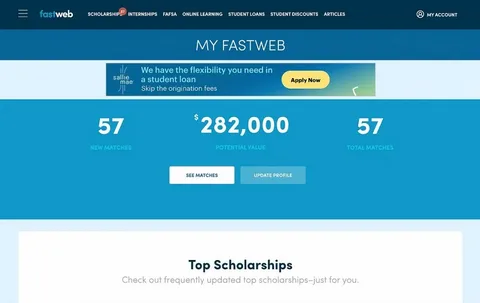
Fastweb’s college scholarship database includes 1.5 million college scholarships, valued at more than $3.4 billion. You create a profile, and the system matches you to awards based on your background, academic level, major, and interests. It’s not perfect, but it’s broad — and broad is useful when you’re just getting started.
Scholarships.com — The Verified Database
Scholarships.com features a verified and continuously updated scholarship database. New scholarships are added daily, and 50% of their database consists of location-based scholarships, which often provide a better chance of winning. That last part is gold: location-based scholarships mean less competition. Always filter by geography first.
College Board BigFuture — The Academic Standard
The College Board Scholarship Search lets you find matches from over 24,000 programs, totaling over $1.5 billion scholarship dollars yearly. It’s particularly strong for merit-based and STEM-related awards.
Bold.org — The Exclusive Network
Bold.org offers exclusive scholarships by major, by academic year, and across various demographics — all 100% free for students. The “exclusive” part matters: these awards are only accessible through Bold.org, which dramatically reduces the competition pool.
CareerOneStop — The Government-Backed Tool
CareerOneStop lets you search more than 9,500 scholarships, fellowships, grants, and other financial aid award opportunities — all backed by the U.S. Department of Labor. It’s especially strong for vocational, trade school, and career-specific awards that mainstream databases often miss.
Unigo — The Niche Matchmaker
When you use Unigo’s personalization tool, you answer a handful of questions and they narrow down millions of awards to those that meet your eligibility criteria. Unigo also famously indexes some of the most unusual scholarships in existence — including awards for students based on hair color, height, and unusual hobbies.
Scholly — The Mobile-First Option
Scholly Scholarships is a free tool to search, find, and apply for college scholarships, letting you search thousands of scholarships by type, deadline, award amount, and more. It became famous after its appearance on Shark Tank and has since helped millions of students find targeted matches on their phones.
Section 3: How to Build Your Scholarship Profile Like a Pro
Here’s a mistake almost everyone makes: they create a bare-bones profile on these platforms and wonder why their matches are weak. The algorithm can only work with what you give it.
Think of your scholarship profile as a dating profile for money. The more specific, compelling, and complete it is, the better your matches will be.
What to include in every scholarship profile:
- Academic details: GPA, intended major, current grade level, school name
- Financial situation: Household income range, dependency status, FAFSA completion status
- Identity markers: Ethnicity, gender, religion, first-generation status, disability status
- Geographic data: State, county, city — the more local the better
- Affiliations: Clubs, sports teams, volunteer work, religious organizations, military connection
- Career goals: Even a rough idea of your intended career opens up major-specific and profession-linked awards
- Employer connections: Parents’ or guardians’ employers often offer scholarships through HR departments
The students who win the most scholarships aren’t always the ones with the best grades. They’re the ones who match the most eligibility criteria across the widest range of awards. Build your profile with that goal in mind.
Section 4: Local and Niche Scholarship Searches That Most Students Skip
Here’s something your school counselor may not have told you: some of the easiest scholarships to win are the ones hiding in plain sight in your own backyard.
There are scholarships for just about every interest and identity. Students might find a few hundred dollars for being from a particular town, having a rare talent, or simply existing. And while a few hundred dollars might not sound life-changing, those awards stack up fast.
Where to find local scholarships:
- Your state’s higher education agency — every U.S. state has one, and most offer state-specific grants and scholarships
- Local community foundations — search “[your city] community foundation scholarship” for hyperlocal awards
- Rotary Clubs, Lions Clubs, and Kiwanis Clubs — these civic organizations collectively give away millions per year
- Local businesses — many small and medium businesses in your area offer annual scholarships, often with almost no competition
- Religious organizations — your church, mosque, synagogue, or temple may offer scholarships that never get widely advertised
- Your high school’s guidance office — schools receive scholarship notices that never make it online
- Trade unions — if a parent or guardian is a union member, there are likely scholarships you haven’t explored
- Your parents’ employers — check HR portals, intranet sites, and benefit guides for education assistance programs
The applicant pool for local scholarships is often just a handful of students from a single county or school district. Your odds of winning aren’t just good — they’re exceptional.
Section 5: Identity-Based and Demographic Scholarship Searches
One of the most powerful — and underutilized — ways to find scholarships you qualify for is to search by who you are, not just what you study.
Some scholarships are awarded based on your background or personal identity. These might be offered to students based on race, ethnicity, gender, religion, LGBTQ+ status, or other characteristics. Many are created to support underrepresented or marginalized groups and help make college more accessible.
This isn’t about gaming the system. These scholarships exist because specific communities invested in ensuring their members could access higher education. If you belong to one of those communities, these awards are meant for you.
Demographic categories with dedicated scholarship pools:
- Race and ethnicity: African American, Hispanic/Latino, Asian American, Native American, Pacific Islander, and multiracial students all have extensive dedicated scholarship ecosystems
- Gender: Women in STEM, women in business, women in trades, and male students in nursing or education all have targeted awards
- First-generation college students: This is one of the largest and most well-funded categories in existence
- Students with disabilities: Physical, cognitive, and learning disabilities all have associated scholarships
- LGBTQ+ students: Foundations like the Point Foundation and numerous local organizations offer substantial awards
- Religion: Nearly every major faith tradition has educational foundations with scholarship programs
- Military families: Active duty, veterans, and military children and spouses have access to dozens of dedicated programs
Organizations like MALDEF provide extensive scholarship lists including many that do not ask about immigration status or require a valid Social Security number. If you or a family member are undocumented or have DACA status, there are still meaningful scholarship opportunities available to you.
Section 6: Major-Specific and Career-Based Scholarship Databases
You don’t just go to college — you go to college to become something. And that “something” is often attached to a scholarship.
If a student plans to study a specific subject or enter a particular career, they may qualify for scholarships tied to that field. These awards are often sponsored by professional associations, companies, or academic departments that want to support students entering the industry. Scholarships can be found for a wide range of fields, including STEM, business, nursing, education, graphic design, arboriculture, filmmaking, and culinary arts.
The trick is knowing where to look beyond the major databases.
Where to find major-specific scholarships:
- Professional associations in your field — almost every profession has a national association with a student scholarship program (the American Chemical Society, the American Bar Foundation, the National Association of Realtors, etc.)
- Academic departments at your college — many departments have their own scholarship funds that aren’t widely advertised
- Industry-specific foundations — technology companies, healthcare systems, and financial institutions all run scholarship programs tied to their sector
- Honorific societies — organizations like Phi Beta Kappa, Tau Beta Pi, and dozens of others offer merit awards to members pursuing specific fields
The deeper you go within your intended career path, the less competition you’ll face and the better your applications will read. A scholarship committee at the American Society of Civil Engineers is going to be far more moved by a personal statement from a student who clearly loves civil engineering than by a generic application from someone who just needs the money.
Specificity wins.
Section 7: The Complete Scholarship Database Comparison (2026)
Let’s put the major platforms side by side so you can decide where to focus your energy first.
| Platform | Database Size | Best For | Free? | Location Filter? | Competition Level |
|---|---|---|---|---|---|
| Fastweb | 1.5M+ scholarships ($3.4B+) | General search, broad matching | ✅ Free | ✅ Yes | High |
| Scholarships.com | 3.7M+ awards ($19B+) | Verified matches, location-based | ✅ Free | ✅ Yes (50% local) | Medium |
| College Board BigFuture | 24,000+ programs ($1.5B+/yr) | Merit-based, academic awards | ✅ Free | ✅ Yes | Medium-High |
| Bold.org | Thousands (exclusive) | Exclusive awards, niche demographics | ✅ Free | ✅ Yes | Low-Medium |
| CareerOneStop | 9,500+ awards | Vocational, trade, career-specific | ✅ Free | ✅ Yes | Low-Medium |
| Unigo | Millions (aggregated) | Unusual/niche scholarships | ✅ Free | ✅ Yes | Low |
| Scholly | Thousands (curated) | Mobile search, quick matching | ✅ Free | ✅ Yes | Medium |
| Scholarship America | Varies (managed programs) | Community and regional awards | ✅ Free (to apply) | ✅ Yes | Low-Medium |
Pro tip: Don’t pick just one. Register on at least three platforms with a fully completed profile. Cross-reference the awards you find, and prioritize any scholarship that appears on multiple databases — it signals legitimacy and staying power.
Section 8: How to Vet Scholarships and Avoid Scams in 2026
Let’s talk about the dark side of scholarship hunting, because it’s real and it’s growing.
Federal agencies are tightening student-aid fraud controls; the U.S. Department of Education announced preventing $1 billion in federal student aid fraud since January 2025 and signaled additional crackdowns expected in 2026. The same fraudulent energy that targets federal aid also targets students searching for private scholarships.
Reputable scholarships are always free. If a scholarship asks you to pay to apply, it’s usually a scam. That’s the single most important rule — write it on a sticky note and paste it on your monitor.
Red flags that signal a scholarship scam:
- Requires an application fee — legitimate scholarships never charge you to apply
- Guarantees you’ll win — no honest scholarship guarantees an award; selection always involves competition
- Asks for your bank account or Social Security number upfront — this is identity theft, full stop
- You didn’t apply but you “won” — if you’re receiving award notices for scholarships you never applied to, treat it as fraud
- Pressure to respond immediately — scammers create artificial urgency to bypass your critical thinking
- Vague sponsor with no verifiable contact information — every legitimate scholarship has a real organization behind it with a verifiable address and website
Do not pay any organization, company, or individual to help you apply for scholarships, conduct a scholarship search, or provide access to scholarship lists. Free scholarship search platforms and your own school’s financial aid office should be your only guides.
How to verify a scholarship is legitimate:
- Search the organization’s name on your state’s charity registration database
- Confirm the sponsor has an active website with a physical address
- Look for past award recipients — legitimate programs often publicize their winners
- Check the Better Business Bureau (BBB) for any complaints
- Call the financial aid office at the sponsoring institution to confirm the award exists
A few minutes of verification can save you from hours of wasted effort — or worse, identity theft.
Section 9: How to Qualify for More Scholarships by Strengthening Your Profile
Here’s a mindset shift that changes everything: rather than asking “which scholarships do I qualify for right now?” ask “what can I do to qualify for more scholarships?”
This isn’t about inflating your résumé. It’s about deliberately building the kind of well-rounded student profile that scholarship committees are actually looking for.
Your grades are important, but they’re not everything. Many awards focus on community service, passion projects, or career goals. The students who win the most scholarships are often the ones who’ve invested in making their lives interesting, not just academically impressive.
Actions that expand your scholarship eligibility:
- Start or lead a club — leadership roles, even in small organizations, significantly expand your eligibility for leadership-focused awards
- Complete community service hours — dozens of scholarships are specifically tied to volunteer work and civic engagement
- Write for a school publication — journalism and communications-focused awards require demonstrated writing experience
- Apply for FAFSA every year, without fail — filling out the FAFSA can qualify you for school-specific scholarships, and many colleges offer their own need-based scholarships for which the FAFSA is required
- Join professional organizations in your field — student membership fees are minimal, but they unlock access to member-exclusive scholarships
- Document everything — keep a running portfolio of achievements, awards, volunteer hours, and projects. When scholarship applications ask for supporting documentation, you’ll have everything ready
Also, don’t overlook the obvious: apply to your college’s own financial aid office directly and ask what institutional scholarships you might qualify for. Many of these awards are not listed in any national database. You have to ask.
Section 10: Scholarship Application Strategy — How to Win, Not Just Apply
Finding scholarships is only half the battle. Winning them is the other half — and it requires a completely different skill set.
The strongest applications clearly show how the applicant’s goals or background align with what the organization values. Tailoring your application to the specific scholarship’s theme or mission makes a measurable difference.
Think of it this way: a scholarship committee isn’t just giving money to a student. They’re investing in a future that aligns with their values, mission, or memory of a loved one. Your job is to show them that you are that future.
A winning scholarship application strategy:
Before you apply:
- Read the scholarship’s mission statement carefully — understand why it exists
- Research past winners if possible — look for patterns in their backgrounds or essays
- Confirm you meet every single eligibility requirement before spending time on the application
Writing the essay (when required):
- Answer the actual prompt — this sounds obvious, but many applicants go off-topic
- Open with a specific scene or moment, not a generic statement about your dreams
- Connect your personal story to the scholarship’s mission in a way that feels organic
- End with where you’re going, not just where you’ve been — committees want to invest in a future
Submitting:
- Prepare for the application process by knowing what’s required — transcripts, recommendations, essays. Start early, follow directions meticulously, stay organized, and proofread every detail, because errors diminish your chances of winning a scholarship.
- Submit before the deadline — many programs cut off submissions the moment the clock hits midnight, with no exceptions
- Keep a spreadsheet tracking every scholarship you’ve applied for, the deadline, the award amount, and the decision date
After applying:
- If you win, send a thank-you note — it’s rare, it’s memorable, and it can sometimes lead to renewed funding the following year
- If you don’t win, email the committee to ask for feedback — not all will respond, but some will, and the insight is invaluable
Volume matters in scholarship applications. Think of it like a numbers game with a strategic edge. The more targeted applications you submit, the more you win. Fastweb’s scholarship resource center recommends treating scholarship applications like a part-time job — setting aside dedicated hours each week during application season and tracking everything systematically.
Section 11: Scholarships by Student Type — Finding Your Best Angle
Not all students approach scholarship hunting from the same starting point. Your student status shapes which opportunities are most relevant and most winnable.
High School Seniors
This is peak scholarship season. You’re eligible for both high-school-specific and general college awards simultaneously, which doubles your opportunity window.
Key databases to prioritize: Fastweb, College Board BigFuture, local community foundations, and your school’s guidance office database. Apply for everything you can in the fall and winter before your first semester begins.
Current Undergraduates
Don’t assume scholarships are only for incoming students. Many awards specifically target sophomores, juniors, and seniors — including awards tied to declaring a major, completing a service project, or demonstrating academic improvement.
Check your school’s financial aid portal, your department’s scholarship board, and professional associations in your field. Scholarships.com’s verified database also lets you filter specifically for undergraduate students at specific academic levels.
Graduate and Professional Students
The scholarship landscape for graduate students is different — more competitive, more specialized, and often more lucrative. Fellowships from the NSF, NIH, Fulbright, and DAAD can cover full tuition plus a living stipend.
Don’t overlook discipline-specific foundations, university research fellowships, and dissertation grants. Professional networks and LinkedIn groups in your field often publicize graduate fellowships that don’t appear in mainstream databases.
Adult and Returning Students
This group is chronically underserved by mainstream scholarship searches — but the awards are out there. Look for scholarships targeting “non-traditional students,” “returning adults,” or “career changers.” Community colleges often have dedicated funds for adult learners, and many workforce development programs include an education component.
Section 12: Building a Scholarship Calendar — Timing Is Everything
Here’s something most guides skip entirely: scholarship timing is a strategy in itself.
Many students apply for scholarships reactively — they stumble across an award the week it’s due and scramble to put together a half-finished application. That’s not how you win.
The annual scholarship calendar most students don’t know about:
| Time of Year | Key Scholarship Actions |
|---|---|
| August–September | Set up profiles on all major databases; begin researching fall deadlines |
| October–November | Peak application season for spring-deadline awards; request teacher recommendations |
| December–January | Submit applications for major national scholarships (most have Jan–March deadlines) |
| February–March | Local and state scholarship deadlines; apply to school-specific institutional awards |
| April–May | Summer and upcoming academic year scholarships; renew recurring awards |
| June–July | Graduate and fellowship applications for the following year; research new databases |
Set calendar reminders for every deadline you discover. Missing a deadline by even one hour — as one student found out when they forgot a required headshot — can cost you thousands of dollars.
Build your scholarship applications like a production schedule, not a hobby.
Section 13: Advanced Scholarship Hacks Most Students Have Never Tried
If you’ve done the basics — set up your profiles, applied to local scholarships, written a few essays — and you’re ready to level up, here are some advanced moves that most students never try.
Stack micro-scholarships. Some students dismiss $250 or $500 awards as not worth the effort. But ten micro-scholarships equals $2,500 to $5,000. Many micro-scholarship applications are simple, quick, and require no essay. Volume is your friend.
Apply for renewable scholarships. A $2,000 renewable scholarship paid over four years is worth $8,000. Always check if an award is renewable, and if it is, prioritize it above one-time awards of similar amounts.
Use ChatGPT or other AI tools as a drafting partner. Use AI to brainstorm your essay angle, create an outline, or punch up your opening paragraph — but write the final version yourself. Scholarship committees can spot AI-generated essays, and authenticity is what wins.
Network into private scholarships. Attend financial aid workshops, college fairs, and community events where scholarship opportunities are sometimes announced before they’re publicly posted online.
Reach out to scholarship sponsors directly. If you genuinely connect with a scholarship’s mission but are unsure whether you qualify, email the organization and ask. Many scholarship administrators appreciate the initiative and will give you clarity — or occasionally, encouragement.
Apply every year. Many students assume they only need to search for scholarships once. Wrong. New scholarships are created every year, your eligibility changes as you advance academically, and renewable awards require annual reapplication. Set a recurring scholarship search appointment on your calendar every August.
Conclusion: The Money Is There. You Just Have to Go Find It.
Here’s the thing about finding scholarships you actually qualify for: it’s not a passive process. It never was. The students who win aren’t the lucky ones — they’re the persistent ones.
They built complete profiles on multiple databases. They searched locally before nationally. They tailored every essay to the specific mission of the award. They submitted on time, followed up thoughtfully, and reapplied every year. They treated scholarship hunting like the serious, time-worthy activity it is.
The scholarship ecosystem in 2026 is vast, complex, and genuinely full of money waiting to be claimed. With the average student borrower leaving college with over $37,000 in student loan debt, every scholarship dollar is one less dollar a student will owe. That framing matters. Every hour you spend on scholarship applications is an hour invested in reducing debt you might otherwise carry for decades.
You don’t need a perfect GPA. You don’t need an extraordinary story. You need the right strategy, the right databases, a complete profile, and the willingness to keep going even after a few rejections.
The money exists. Now go find it.
📣 Call to Action
Found this guide helpful? Share it with a student, parent, or counselor who needs it — this is the kind of resource that actually changes financial outcomes.
Drop a comment below: Which scholarship database have you had the most success with? We’d love to build a community list of underrated, high-value awards.
Disclaimer: Scholarship databases and award details change frequently. Always verify eligibility requirements and deadlines directly on the scholarship provider’s official website before applying.
